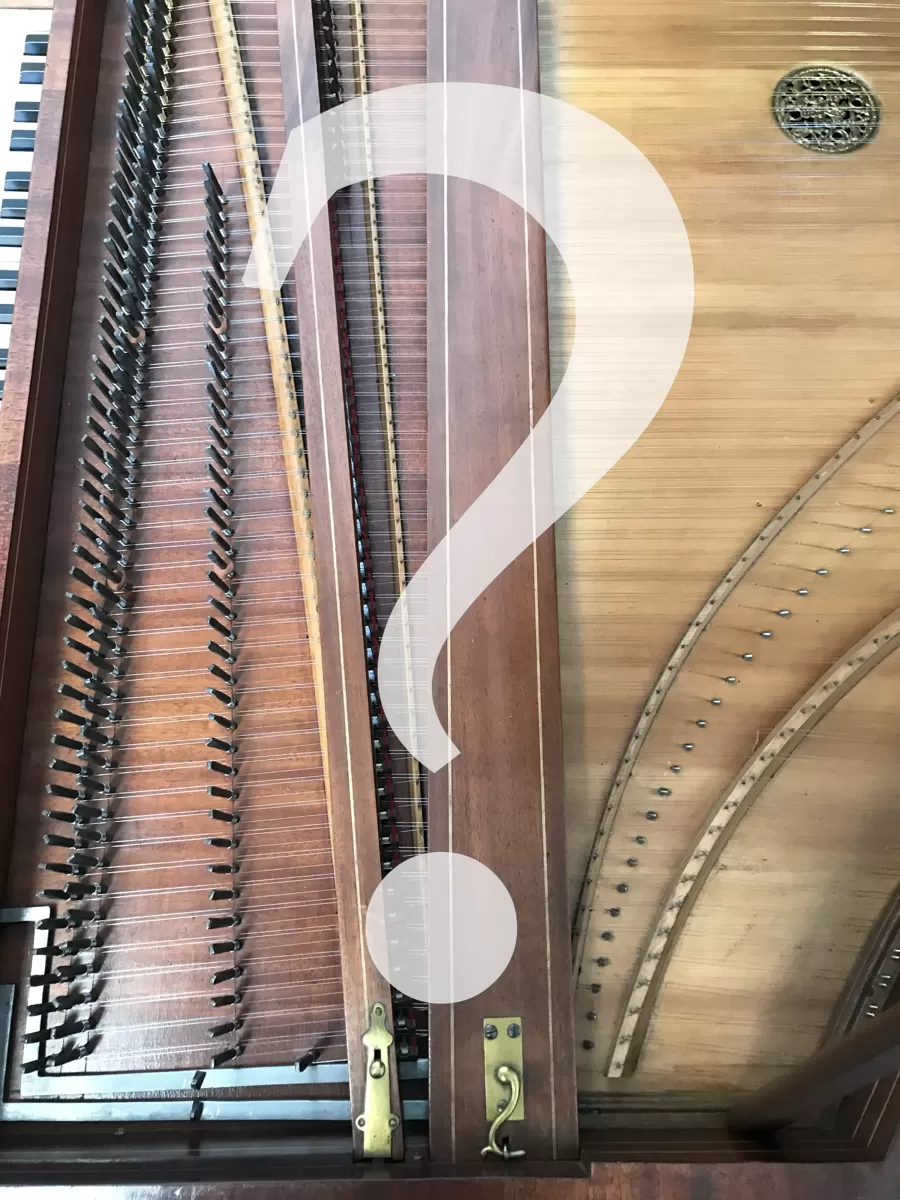
Are you up on the harpsichord world? Try the diverse questions in this quick quiz!
|
“Short octave” refers to several various arrangements of the keyboard to extend the bass range of an instrument, omitting notes which are not likely to be required in music of the time. The most common is the C/E short octave, where the apparent bottom note E sounds C, the F sounds D, and the G♯ sounds E. (Each of those keys sound a third lower.) The first chromatic note on the C/E short octave keyboard is B♭, played from the B♭ key as expected.
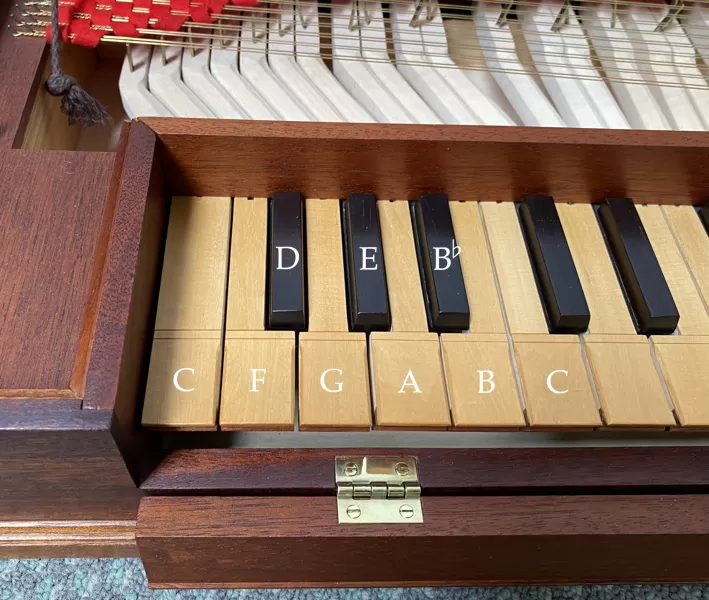 CAREY BEEBE |
| C/E short octave on a Triple-fretted Clavichord |
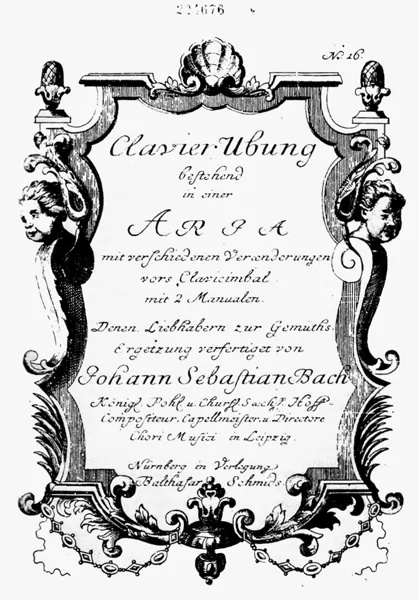
There are thirty diverse variations following the Aria in Johann Sebastian Bach’s Goldberg Variations BWV988, published in 1741 as the final part of his Clavier Ubung. Bach specified that a double-manual harpsichord is required.
 WIKIMEDIA COMMONS |
| Goldberg Variations title page |
 |
Trailer: Goldberg Variations by Bach performed by Erin Helyard | Pinchgut Opera Australia’s pre-eminent harpsichordist, Erin Helyard, brings Bach’s Goldberg Variations to life on screen in a striking architectural space. Film coming soon. The Ruckers Double Harpsichord |
 |
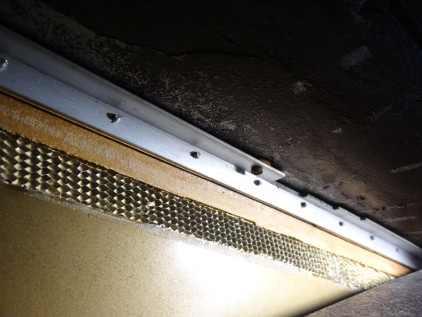
Unashamedly modern in his approach, John Challis (1907–1974) abandoned traditional materials in favor of metal framing, pierced metal bridges and soundboards, although wooden casework was often attached to the substantial metal structure of his instruments to make them look more like the harpsichords of his day.
 CAREY BEEBE |
| Underside of 1951 Challis aluminum soundboard at spine, showing honeycomb layer Restored instrument in Honolulu Museum of Art |
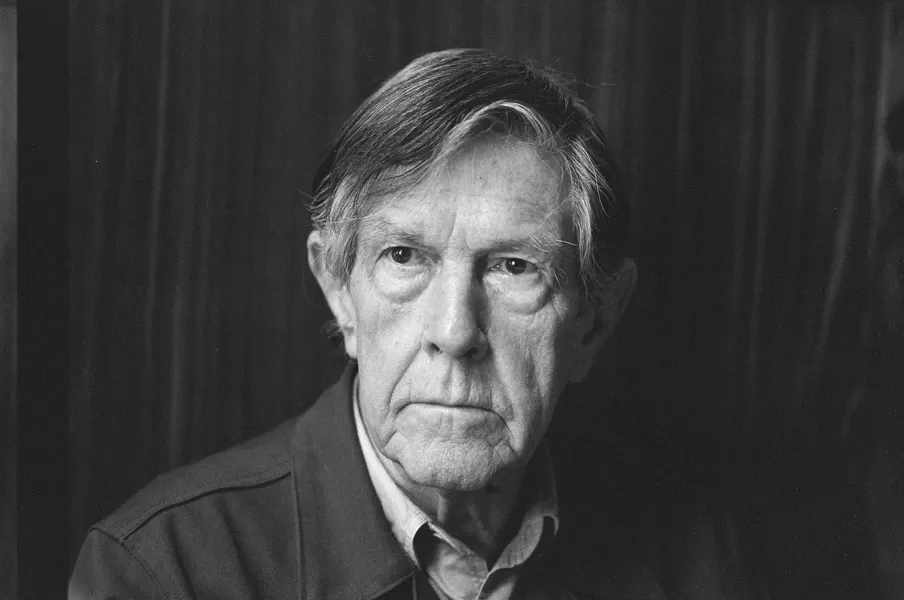
HPSCHD is a multimedia composition for seven amplified harpsichords and computer generated sounds on tape by John Cage (1912–1992) and Lejaren Hiller (1924–1994).
 ROB BOGAERTS / ANEFO, CC0 via WIKIMEDIA COMMONS |
| John Cage in 1988 |
Glen Wilson authored a fascinating biography in 2024 titled: Hitler’s Harpsichordist — The Passionate Life and Troubled Times of Eta Harich-Schneider.
Eta Harich-Schneider (1894–1986) is appreciated for her A History of Japanese Music published by Oxford University Press in 1973, but in the harpsichord world we know her 1939 Die Kunst des Cembalo-spiels, and its English 1973 abridgement The Harpsichord — an introduction to the technique style and the historical sources. Both were published by Bärenreiter, and were particularly remarkable for the photographs of grotesque hand positions inherited from Landowska.
 AMAZON.COM |
| Book cover: Hitler’s Harpsichordist — The Passionate Life and Troubled Times of Eta Harich-Schneider |
Howard Hughes’ giant H-4 Hercules seaplane nicknamed “Spruce Goose” was actually built from birch ply. It only ever made a single test flight of twenty-six seconds duration on 2 November 1947.
 SDASM ARCHIVES, PUBLIC DOMAIN via WIKIMEDIA COMMONS |
| “Spruce Goose” on its maiden (& only) flight in 1947 |
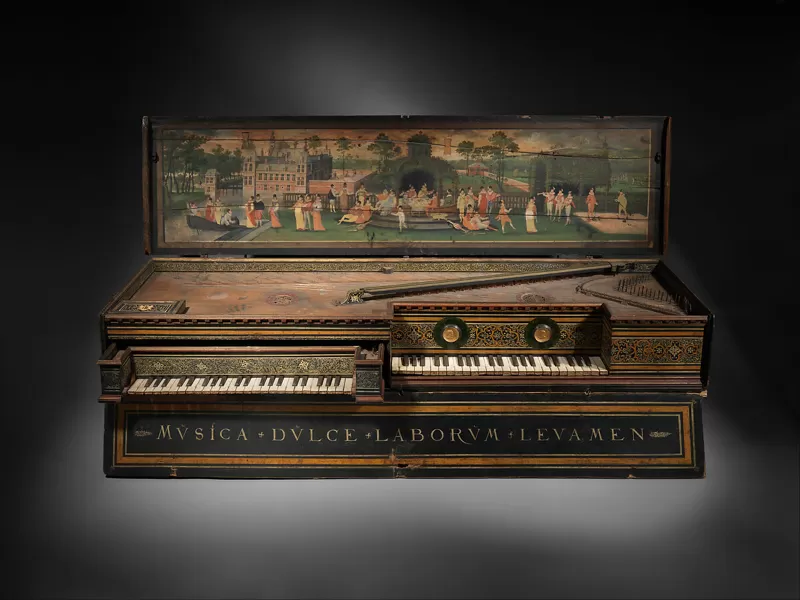
The earliest surviving dated instrument by the Ruckers dynasty is the 1581 Hans Ruckers Mother & Child virginals. It was discovered in 1916 near Cuzco, Peru in the chapel of the hacienda which in the Spanish colonial days belonged to the Marquises of Oropesa, descendants of the Incas. The instrument was donated to New York’s Metropolitan Museum of Art in 1929.
This Mother & Child certainly had a journey from the Ruckers workshop in Antwerp to reach its home in the New World. Being part of the Spanish Netherlands, Antwerp was under the control of the Spanish Habsburgs from 1556 to 1714. The instrument likely made its way to the New World by the usual Spanish trade route of the time: Ship across the Atlantic through the Caribbean; unloaded for transport by mule across the isthmus of Panama to reach the Pacific Ocean; then another ship down the west coast to Lima, where the Spanish centre of power had been established in the more temperate climate; and finally the remaining 1100km up into the Andes to reach Cuzco’s elevation of 3400m.
 PUBLIC DOMAIN / NEW YORK METROPOLITAN MUSEUM of ART |
| 1581 Hans Ruckers Mother & Child Virginals |
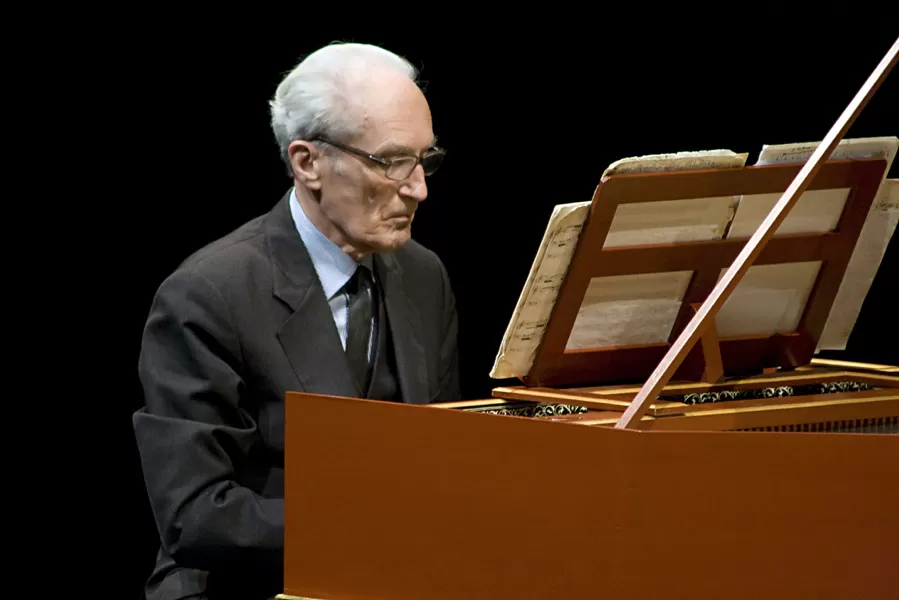
Gustav Leonhardt (1928–2012) made his harpsichord debut on 7 April 1951 in the Brahms-Saal of Vienna’s Der Musikverein with a performance of JS Bach’s Die Kunst der Fuge BWV1080.
 WIKIFALCON via WIKIMEDIA COMMONS / PUBLIC DOMAIN |
| Gustav Leonhardt at the 2007 MAfestival in Bruges |
François Couperin (1668–1733) wrote in the preface to his 1713 Premier livre de pièces de clavecin:
Experience has taught me that strong hands, capable of the most rapid and light execution, are not always equally successful in tender and expressive pieces. For my part, I frankly confess that I would much sooner be moved than be astonished.
L’usage m’a fait connoître que les mains vigoureuses, et capables d‘exécuter ce qu’il y a de plus rapide et de plus léger, ne sont pas toûjours celles qui réüssissent le mieux dans les piéces tendres et de sentiment, et j’avoüeray de bonne foy que jayme beaucoup mieux ce qui me touche que ce qui me surprend.
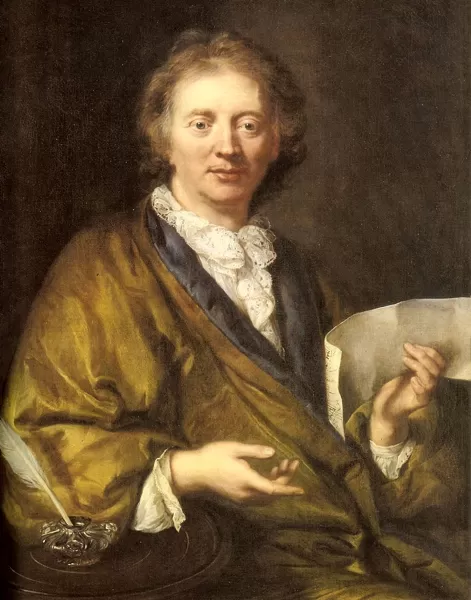 PALACE of VERSAILLES / WIKIMEDIA COMMONS |
| François Couperin |
Harpsichord jack tongue springs were commonly made from boar bristle. The polymer PEEK (Polyether ether ketone), discovered in 1978, is one of the few plastics with similar strong spring behavior to the organic original.
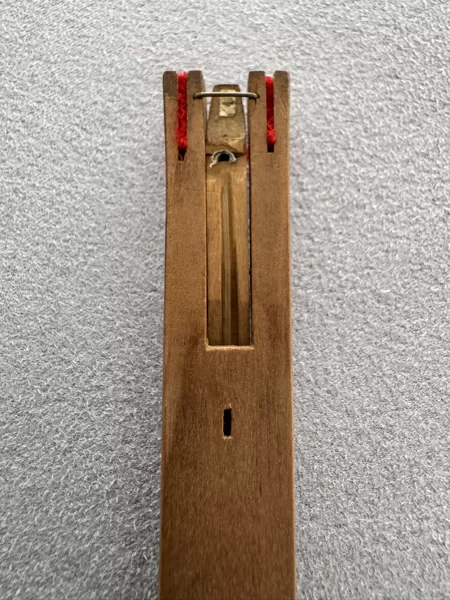 CAREY BEEBE |
| Reverse of an original 1763 Kirckman jack showing the boar bristle spring |
Many instruments passed through the hands of Leopoldo Franciolini (1844–1920). Some were genuine, but many were radically altered using parts from other instruments and old furniture—and some were undoubtedly outright forgeries. They can be found today in museums and collections around the world.
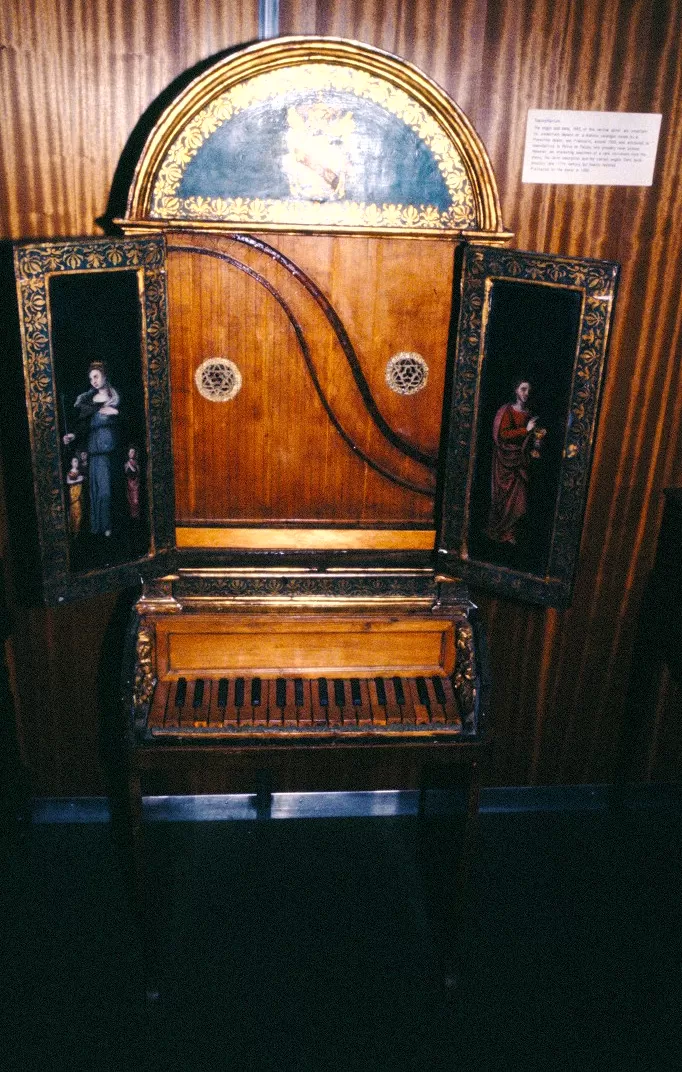 CAREY BEEBE |
| Franciolini Clavicytherium “Petrus de Paulus Fecit 1587” Hans Alder Collection, Wits University Johannesburg |
Ralph Kirkpatrick (1911–1984) made his harpsichord debut in 1930, before traveling to Europe where he had lessons with Wanda Landowska and others. An eminent scholar as well as harpsichordist, he was responsible for the “K” numbers cataloging Domenico Scarlatti’s 555 sonatas.
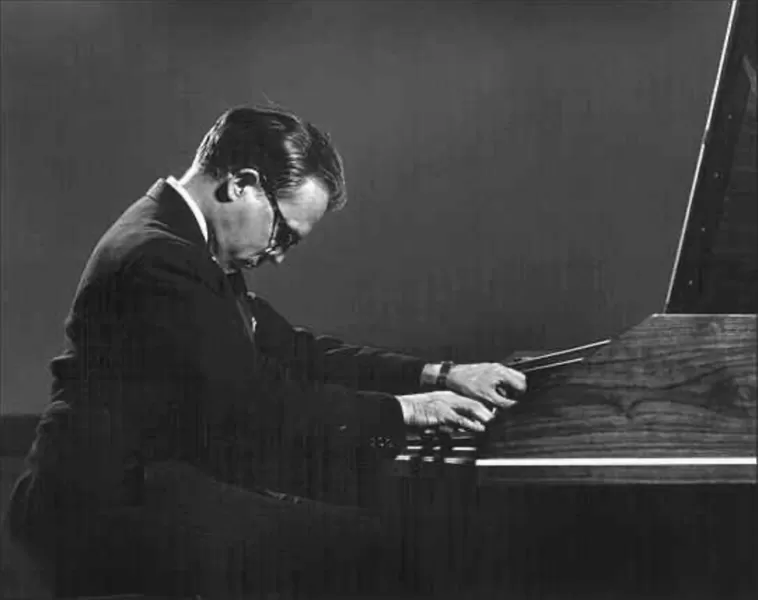 BACH-CANTATAS.COM |
| Ralph Kirkpatrick |
An explosion can be heard halfway through Wanda Landowska’s (1879–1959) HMV recording of Scarlatti’s Sonata in D K490 on her Pleyel harpsichord.
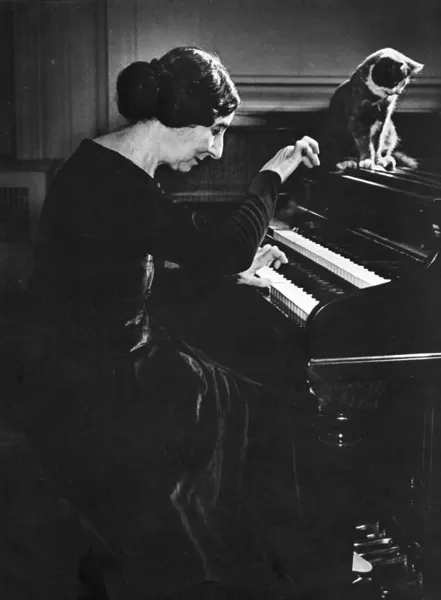 ACADÉMIE BACH |
| Wanda Landowska at her Pleyel |
Wolfgang Joachim Zuckermann (1922–2018) invented the harpsichord kit around 1960. The Zuckermann Slantside kit was originally priced at USD150. More than ten thousand were sold until the beloved Z-Box (“Zee-Box”) ceased production in 1972. By that time David Way (1918–1994) had taken over Zuckermann Harpsichords, his publishing company October House having published Wolfgang’s book The Modern Harpsichord — Twentieth-Century Instruments and Their Makers in 1969. By his study of original instruments, David Way was able to gradually turn Zuckermann kit instrument production towards more historic-based concepts.
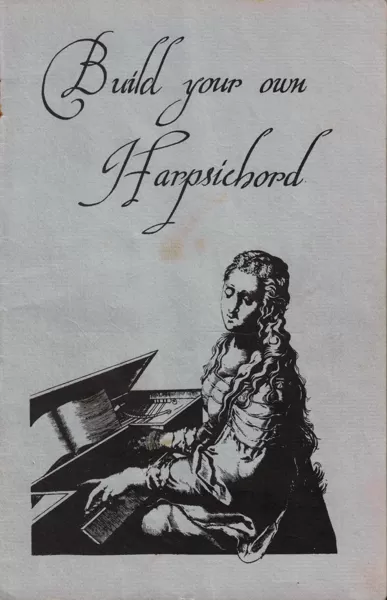 CAREY BEEBE |
| Cover of the one of the first brochures for the Zuckermann kit harpsichord |
Dr Charles Burney (1726–1814) visited Carl Philipp Emanuel Bach (1714–1788) on 12 October 1772, and reported that Bach entertained him on the clavichord:
After dinner… I prevailed upon him to sit down again to a clavichord, and he played, with little intermission, till near eleven o’clock at night. During this time, he grew so animated and possessed, that he not only played, but looked like one inspired. His eyes were fixed, his under lip fell, and drops of effervescence distilled from his countenance. He said, if he were to be set to work frequently, in this manner, he should grow young again.
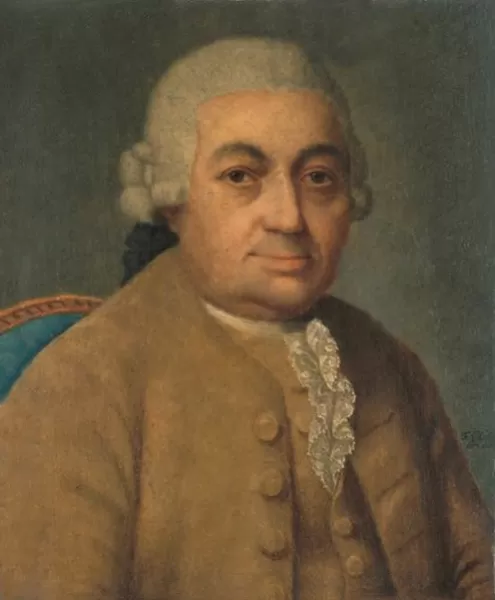 WIKIMEDIA COMMONS |
| Carl Philipp Emanuel Bach painting by Franz Conrad Löhr in Gemäldegalerie Berlin |
In his diary entry for 2 September 1666, Samuel Pepys (1633–1703) noted that:
River full of lighters and boats taking in goods, and good goods swimming in the water, and only I observed that hardly one lighter or boat in three that had the goods of a house in, but there was a pair of Virginalls in it.
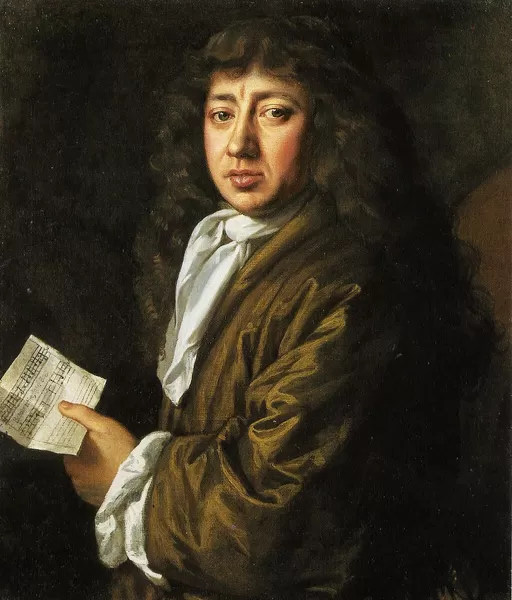 WIKIMEDIA COMMONS / PUBLIC DOMAIN |
| Portrait of Samuel Pepys by John Hayls (1600–1679) |
Burkat Schudi (1702–1773) & Jacob Kirckman (1710–1792).
 CAREY BEEBE |
| Inscription on the 1775 Kirckman nameboard batten |
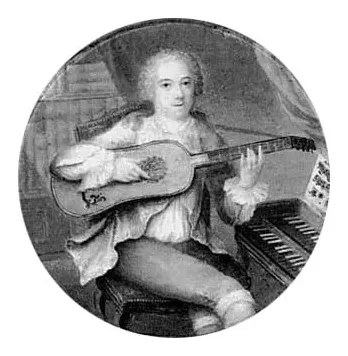
Claude Balbastre (1724–1799). Dr Charles Burney (1726–1814) visited Balbastre and heard him play the organ in St Roche on Sunday 17 June 1770. Later, Burney visited him at home and reported:
After church M. Balbastre invited me to his house, to see a fine Rucker harpsichord which he has had painted inside and out with as much delicacy as the finest coach or even snuff-box I ever saw at Paris.
 WIKIMEDIA COMMONS |
| Claude Balbastre (1724–1799) |
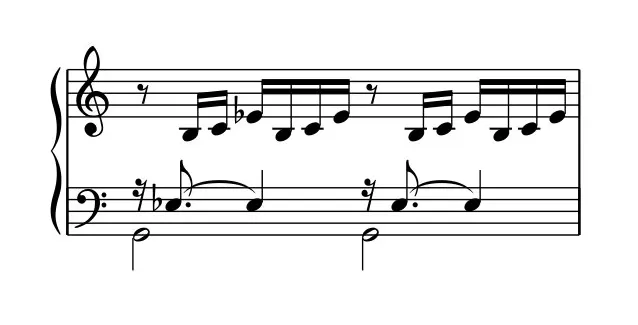
Christian Friedrich Gottlieb Schwencke (1767–1822) made a copy of Book 1 of JS Bach’s Das wohltemperierte Klavier in 1783, adding a bar between 22 & 23 to the first piece, Prelude in C BWV 846—perhaps because of a perceived error in Bach’s harmonic progression. Various printed editions of the work from the early 1800s included this non-authentic so-called “Schwencke measure”, including the one prepared by Carl Czerny (1791–1857) for Peters in 1837.
 G HENLE VERLAG |
| “Schwencke measure” |
Charles-François Gounod (1818–1893) published his Méditation sur le 1er prélude de piano de S. Bach (AKA Ave Maria) in 1853, based on this erroneous edition with the extra bar.
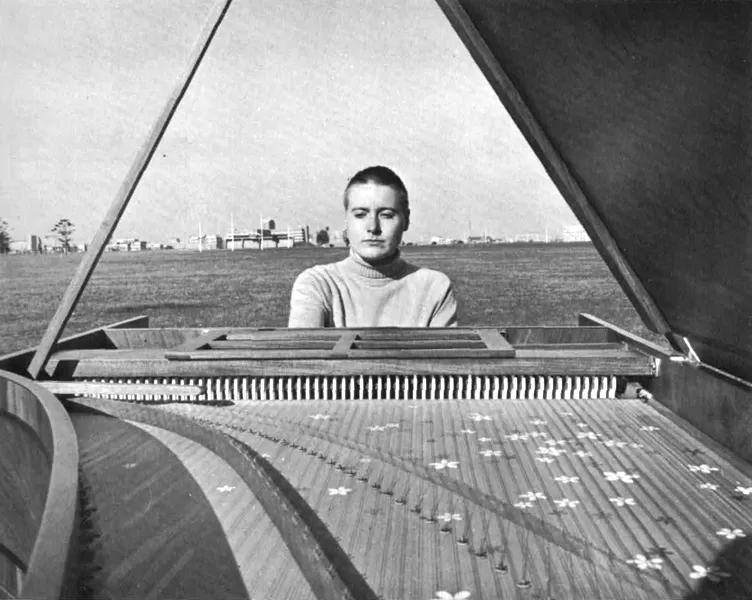
Melbourne harpsichord maker Mars McMillan (1944–2016) was pictured at her harpsichord in an Australian Rules field on p145 of Wolfgang Zuckermann’s The Modern Harpsichord — Twentieth-Century Instruments and Their Makers.
 THE MODERN HARPSICHORD |
| Mars McMillan in Wolfgang Zuckermann’s The Modern Harpsichord |
The group of harpsichord makers gathered around Mars McMillan and Alastair McAllister were affectionately known as “The Clifton Hill School”, after the Melbourne inner city suburb.
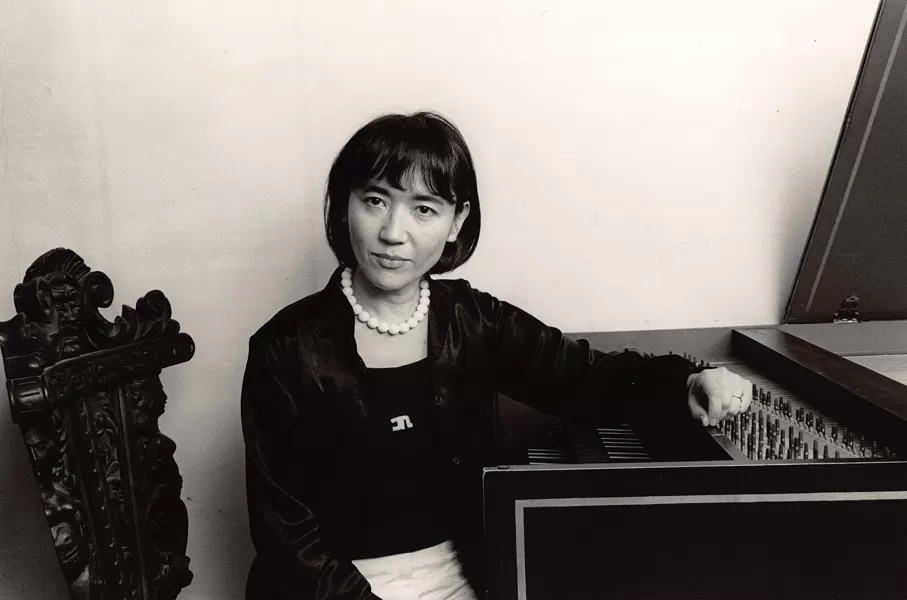
In the article on “Japan” she contributed to Routledge’s 2007 The Harpsichord and Clavichord — An Encyclopedia, the late Motoko Nabeshima (1936–1999) claimed she was the first Japanese harpsichordist to study with Leonhardt.
 古楽研究会 ORIGO ET PRACTICA / WIKIMEDIA COMMONS |
| Motoko Nabeshima at her harpsichord in the late 1970s |
Trevor Pinnock (b1946) founded The English Concert in 1972 and remained director until 2003. From 1978 the ensemble recorded on Deutsche Grammophon Archiv.
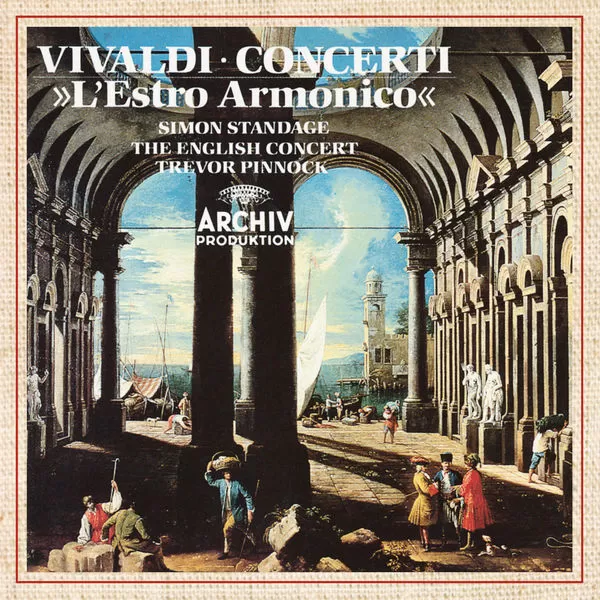 |
| English Concert record cover from 1987 |
Christopher Hogwood (1941–2014) founded the Academy of Ancient Music in 1973 and remained director until 2006. They recorded on L’Oiseau-lyre (Decca).
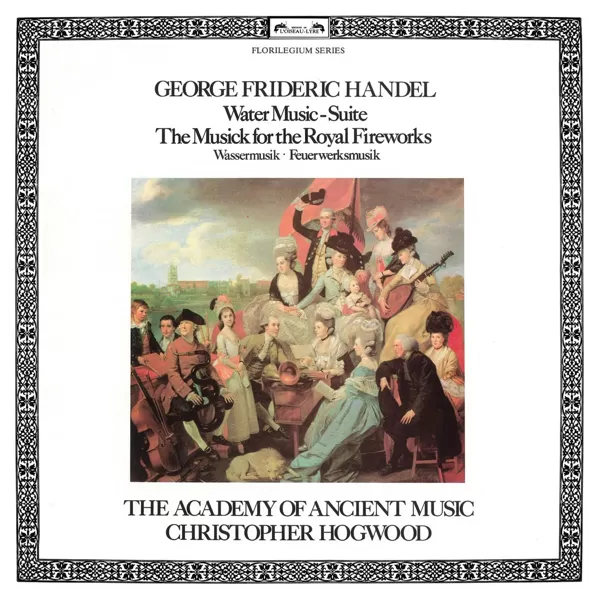 |
| Academy of Ancient Music record cover from 1981 |
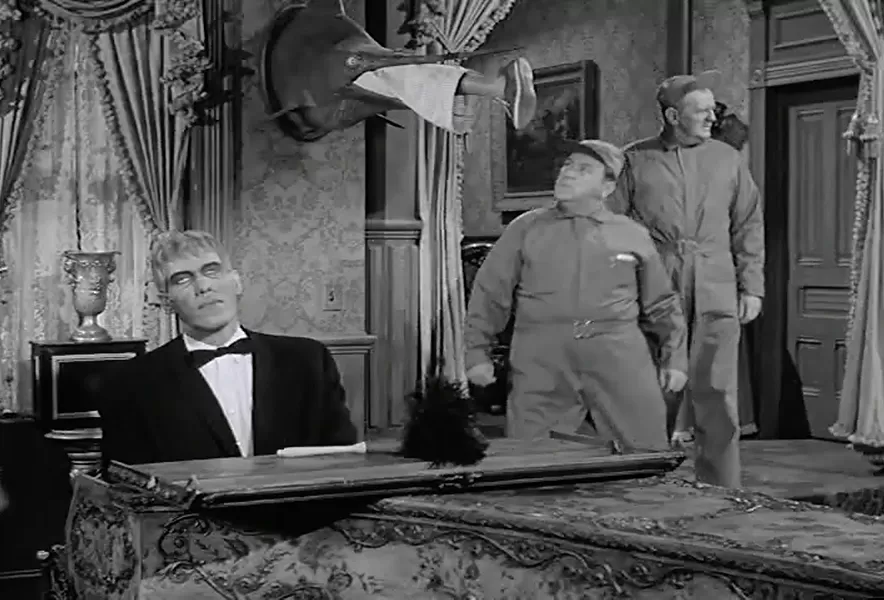
Lurch’s harpsichord was a 1503 Krupnik. (Krupnik is actually a traditional Polish barley soup.) The catchy theme tune for The Addams Family used in the opening credits features harpsichord along with finger clicks. “Lurch and His Harpsichord” is the title of the twenty-fifth episode, where a curator wants to take the beloved instrument away from the family for a fine arts museum, but is tricked into taking a substitute built by Gomez and Uncle Fester.
 ADDAMS FAMILY WIKI / FANDOM |
| Lurch at his Krupnik harpsichord |
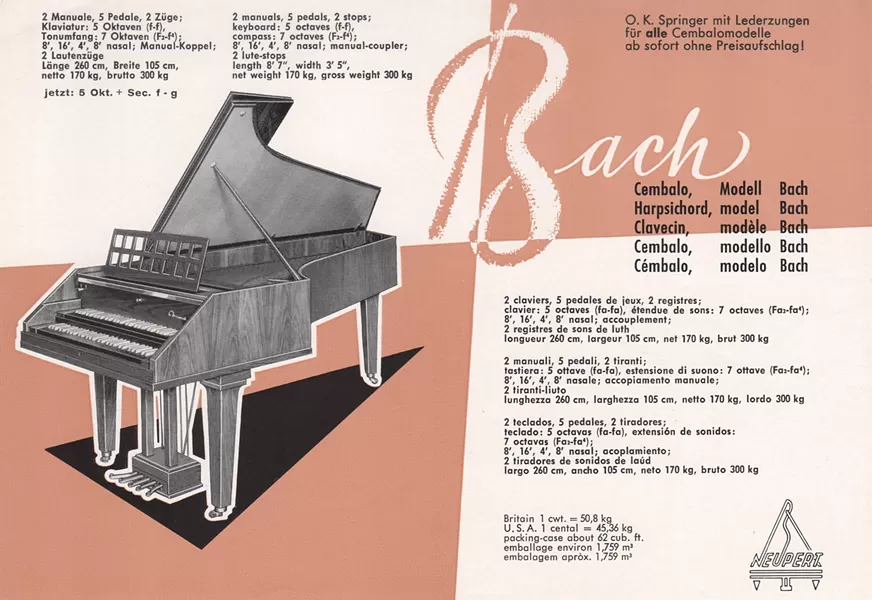
The last family member heading the firm was Wolf-Dieter Neupert (b1937): Herr Manfred Büttner has been the Managing Director of J.C. Neupert GmbH & Co. KG since 2012.
 CAREY BEEBE |
| 1960s Neupert “Bach” model harpsichord brochure |
Both the late Pope Benedict XVI—Cardinal Joseph Ratzinger (1927–2022)—and his elder brother Monsignor Georg Ratzinger (1924–2020) were music lovers. For a mildly exorbitant fee, Getty Images offers the usage rights for a picture of Georg Ratzinger seated at his Wittmayer revival-type spinet at his home in Regensberg.
New York harpsichordist Elaine Comparone can be seen standing while playing her 1972 Frank Hubbard French Double.
Sections of The Stranglers’ 1982 harpsichord hit “Golden Brown” are multirhythmic, effectively in 13/8 time.
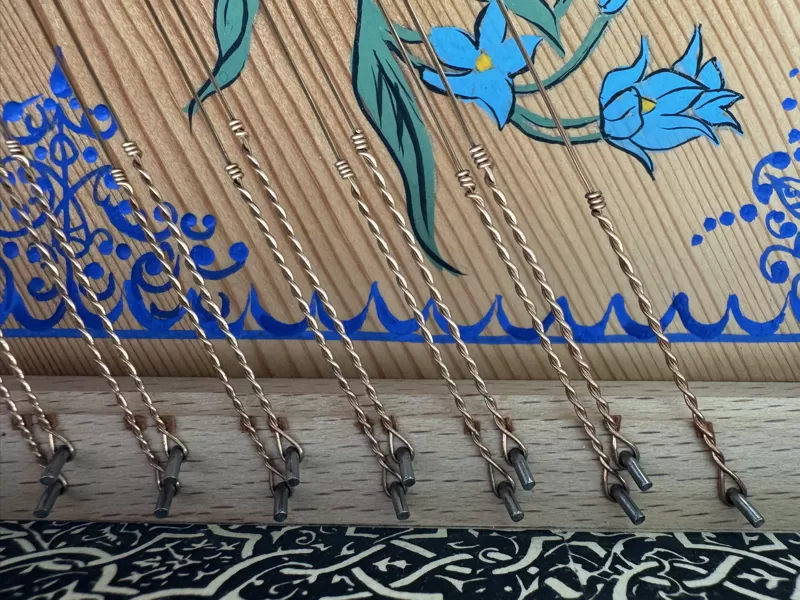
Red Brass—typically 90% copper & 10% zinc—came into use in the 1980s and offered significant tonal advantage over the modern Phosphor Bronze.
 CAREY BEEBE |
| Red Brass bass strings |
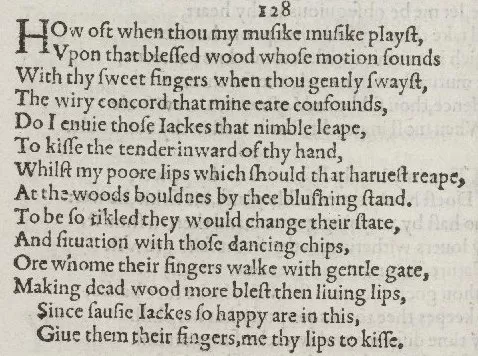
In Sonnet 128, William Shakespeare (1564–1616) is dreaming if he might be the instrument the object of his sexual desire is caressing. We can forgive Shakespeare that the player, of course, only touches the keys to make the jacks leap nimbly, rather than touching the jacks directly.
 WILLIAM SHAKESPEARE / WIKIMEDIA COMMONS |
| Sonnet 128 from the 1609 Quarto |
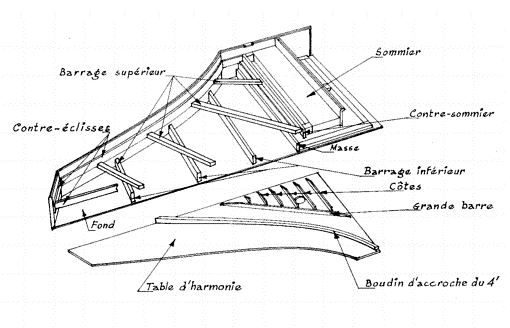
If you were hungry enough, you could be forgiven for wanting to eat the baguette (lid stick) or perhaps even the boudin (literally “sausage”, but also the French term for the 4´ hitchpinrail).
 THE PARIS WORKSHOP |
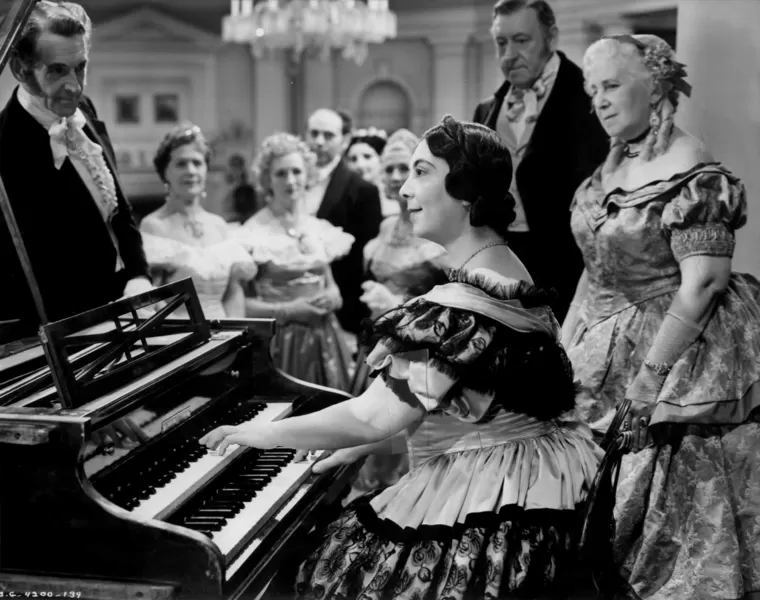
Alice Ehlers (1887–1981) played Mozart’s Rondo alla Turca, the third movement of Mozart’s Sonata in A K331 in “Wuthering Heights”.
 CAREY BEEBE |
| Alice Ehlers playing harpsichord in “Wuthering Heights” |
How did you score?
Don’t fret on your result: We all know different things.
While some of the answers might fall within familiar territory for general music lovers,
many of the questions are highly specific and require broad niche knowledge of the harpsichord.
 |
Site overview |
|
Harpsichords Australia Home Page |
